Loading...
Think Lab

Google’s AI Changed How People Shop Online. Here’s What Every Merchant Needs to Know.

Google’s AI has fundamentally changed how people discover and buy products online. If your Shopify store isn’t set up for what’s already here, you won’t just fall behind — you won’t even show up.

Image

What just changed — and why it’s a big deal

For two decades, getting found online meant ranking on Google’s first page. Merchants invested in keywords, backlinks, and digital strategy. That playbook worked — until now.

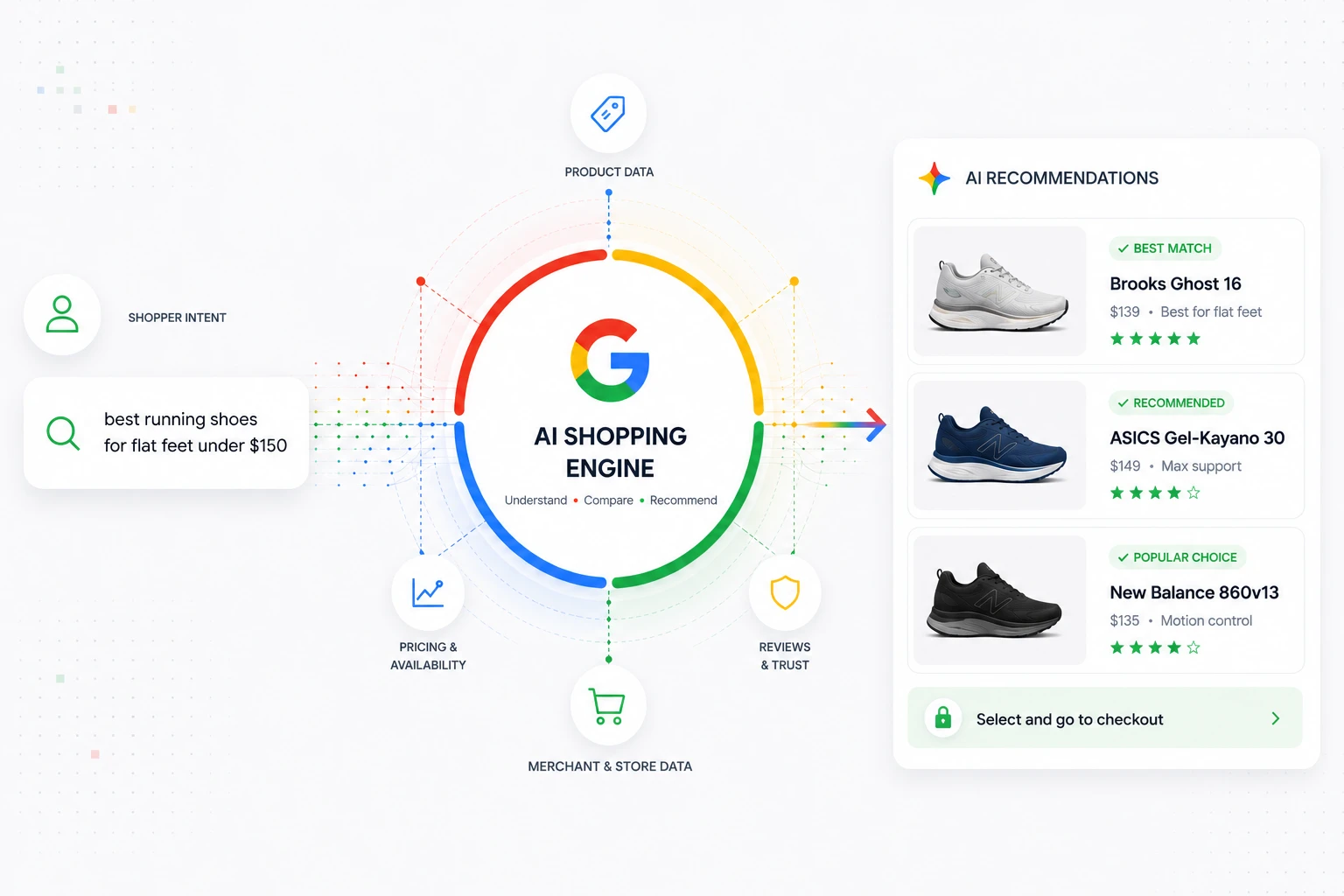
Google’s AI has shifted from a search engine into a personal shopping agent. Instead of returning a list of links, it now understands intent, retrieves product data, compares options, and delivers a direct recommendation — often without the user ever visiting your website.

A shopper typing “best running shoes for flat feet under $150” into Google’s AI Mode now gets a curated shortlist with a direct buy button. They never browse your product page. The AI made the decision for them.

A #1 organic ranking no longer guarantees placement in the AI answer displayed above it. Research shows only 17–38% of AI Overview citations come from Google’s top-10 organic results. The old playbook is no longer enough.

Introducing GEO: Generative Engine Optimisation

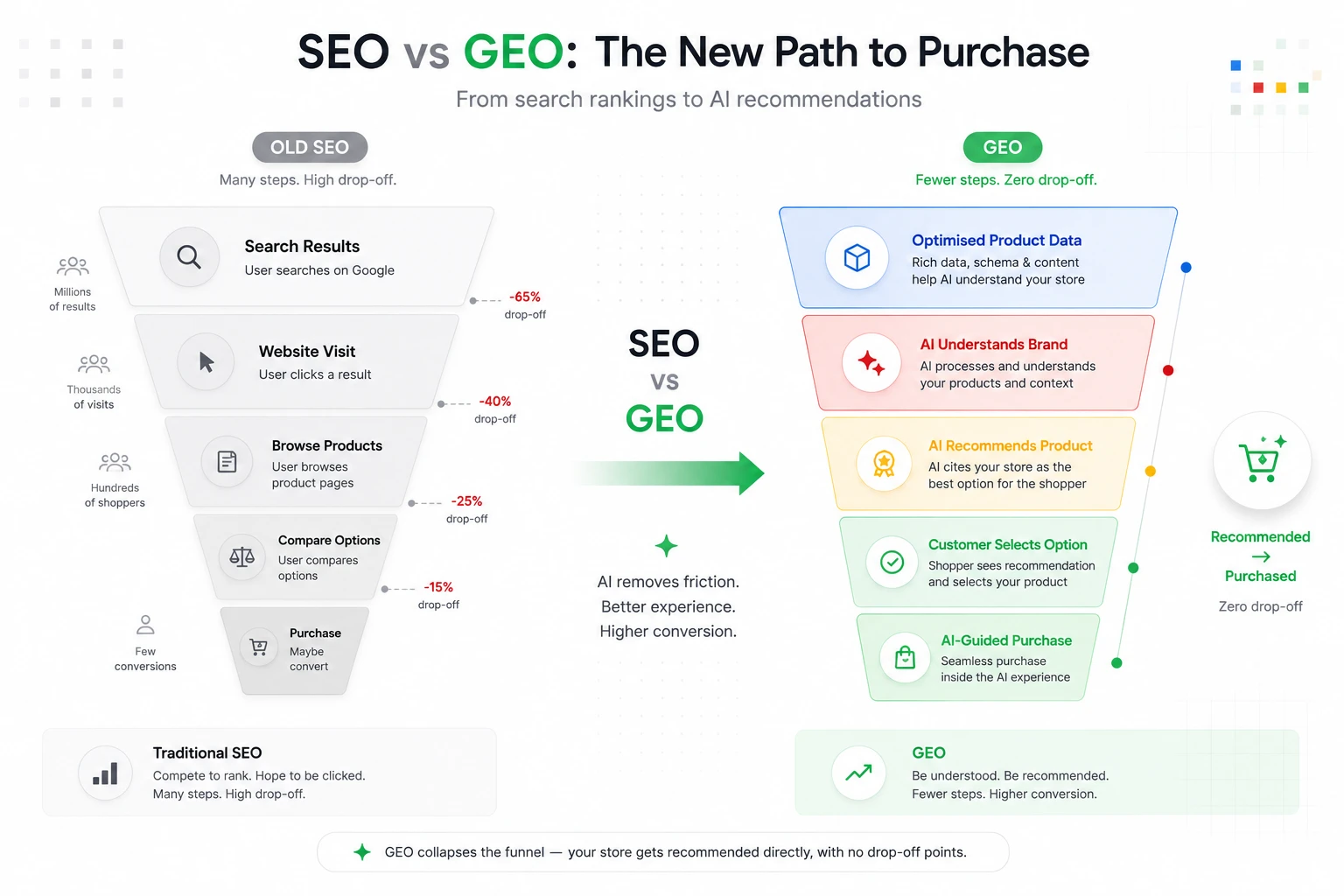
Just as early SEO created lasting ranking advantages, merchants who invest in Generative Engine Optimisation (GEO) today will build a compounding edge as AI shopping scales. If you’re evaluating platform readiness, this guide is a useful starting point.

Image

GEO is the practice of optimising your content so AI systems — like Google Gemini, ChatGPT Shopping, Claude and Perplexity — retrieve, rank, and recommend your store in response to natural language queries.

AI agents don’t evaluate your website the way humans do. They evaluate structured data, product feeds, schema markup, trust signals, and data completeness. A compelling homepage means nothing if your product feed is incomplete.

What GEO prioritises

  • Data completeness — rich metadata, detailed attributes, comprehensive product descriptions 
  • Structured formatting — proper taxonomy, categorisation, and schema.org markup 
  • Trust signals — genuine reviews, ratings, and third-party mentions 
  • Feed hygiene — accurate, real-time inventory and pricing data 
  • Authority signals — editorial mentions, community presence, and external citations

RELATED READING

Agentic shopping: the AI that buys on your behalf

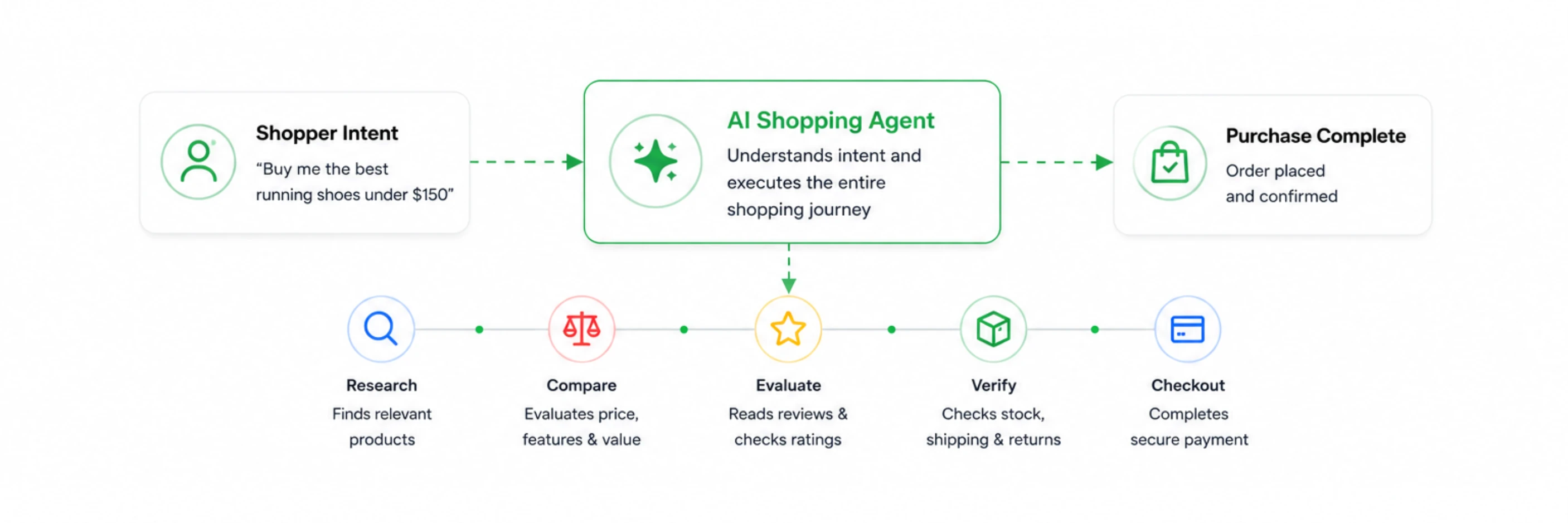
Agentic shopping represents the next frontier — AI systems that don’t just recommend products but complete purchases autonomously. Google debuted agentic checkout ahead of the 2025 holiday season, allowing shoppers to hand off the buying decision entirely to Gemini.

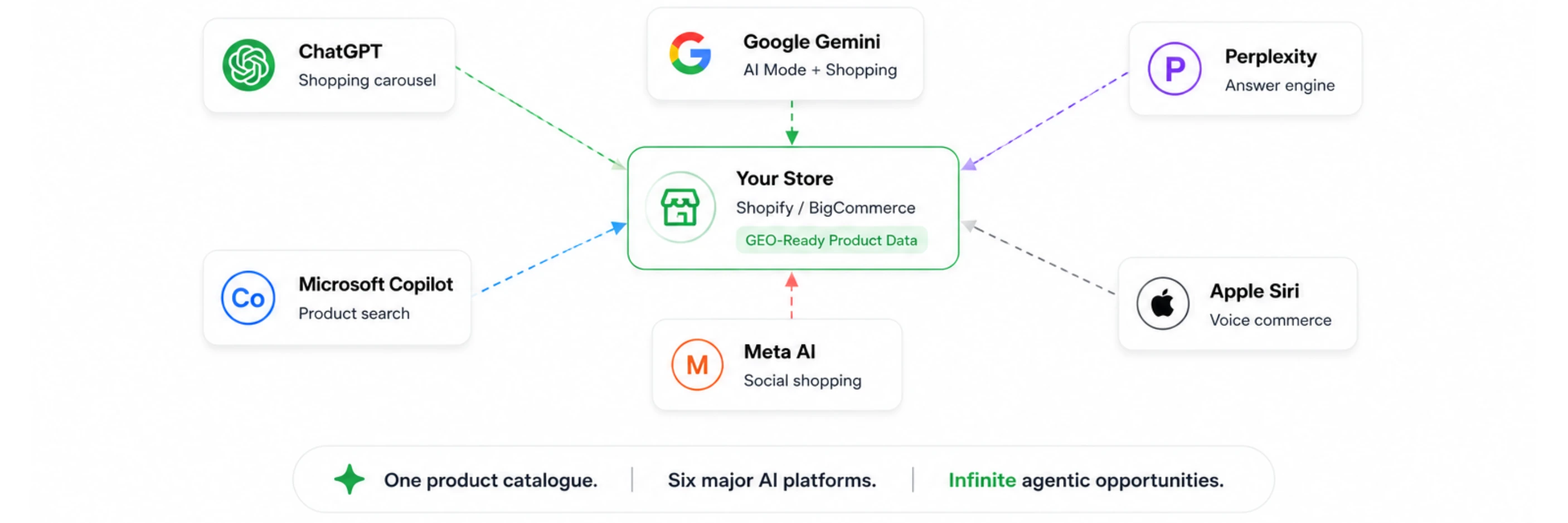
Shopify Plus merchants are already discoverable across ChatGPT, Microsoft Copilot, Google AI Mode, and the Gemini app. As we explored in our SFCC to Shopify Plus migration case study, the platform’s native integrations offer a significant head start over legacy enterprise stacks.

Image

Image

"Shopify Catalog uses machine learning and billions of transaction signals to infer additional product attributes. Learn more about how agentic commerce works on Shopify.

Before and after: what changes for your store .

01

Product discovery

OLD SEO APPROACH

GEO APPROACH

/api/media/file/1.webpOptimise for keyword rankings
/api/media/file/4.webpOptimise product feed completeness
/api/media/file/1.webpCompete for page-one organic spots
/api/media/file/4.webpGet cited inside AI-generated answers
/api/media/file/1.webpRely on shoppers clicking your link
/api/media/file/4.webpBe recommended without a click
/api/media/file/1.webpWrite content for human browsers
/api/media/file/4.webpStructure data for AI agents
OLD SEO APPROACH
/api/media/file/1.webpOptimise for keyword rankings
/api/media/file/1.webpCompete for page-one organic spots
/api/media/file/1.webpRely on shoppers clicking your link
/api/media/file/1.webpWrite content for human browsers
GEO APPROACH
/api/media/file/4.webpOptimise product feed completeness
/api/media/file/4.webpGet cited inside AI-generated answers
/api/media/file/4.webpBe recommended without a click
/api/media/file/4.webpStructure data for AI agents
02

Content strategy

OLD SEO APPROACH

GEO APPROACH

/api/media/file/1.webpKeyword density and volume
/api/media/file/4.webpIntent-driven, depth-first content
/api/media/file/1.webpThin product descriptions
/api/media/file/4.webpRich attribute-level product data
/api/media/file/1.webpGeneric category pages
/api/media/file/4.webpFAQ content AI agents can cite
/api/media/file/1.webpBacklink-first strategy
/api/media/file/4.webpAuthority through editorial mentions
OLD SEO APPROACH
/api/media/file/1.webpKeyword density and volume
/api/media/file/1.webpThin product descriptions
/api/media/file/1.webpGeneric category pages
/api/media/file/1.webpBacklink-first strategy
GEO APPROACH
/api/media/file/4.webpIntent-driven, depth-first content
/api/media/file/4.webpRich attribute-level product data
/api/media/file/4.webpFAQ content AI agents can cite
/api/media/file/4.webpAuthority through editorial mentions
03

Technical infrastructure

OLD SEO APPROACH

GEO APPROACH

/api/media/file/1.webpMeta tags and page titles
/api/media/file/4.webpSchema markup as mandatory
/api/media/file/1.webpSitemaps and robots.txt
/api/media/file/4.webpReal-time feed accuracy
/api/media/file/1.webpPage speed as primary signal
/api/media/file/4.webpCheckout API reliability
/api/media/file/1.webpStructured data as optional extra
/api/media/file/4.webpServer-side tracking essential
OLD SEO APPROACH
/api/media/file/1.webpMeta tags and page titles
/api/media/file/1.webpSitemaps and robots.txt
/api/media/file/1.webpPage speed as primary signal
/api/media/file/1.webpStructured data as optional extra
GEO APPROACH
/api/media/file/4.webpSchema markup as mandatory
/api/media/file/4.webpReal-time feed accuracy
/api/media/file/4.webpCheckout API reliability
/api/media/file/4.webpServer-side tracking essential

Is your Shopify store ready to scale?

ThinkLab helps ambitious Shopify and Shopify Plus brands improve performance, streamline operations, and create better customer experiences.

Talk to a Shopify Expert → ↗ 

How to set up your store to win in AI search ?

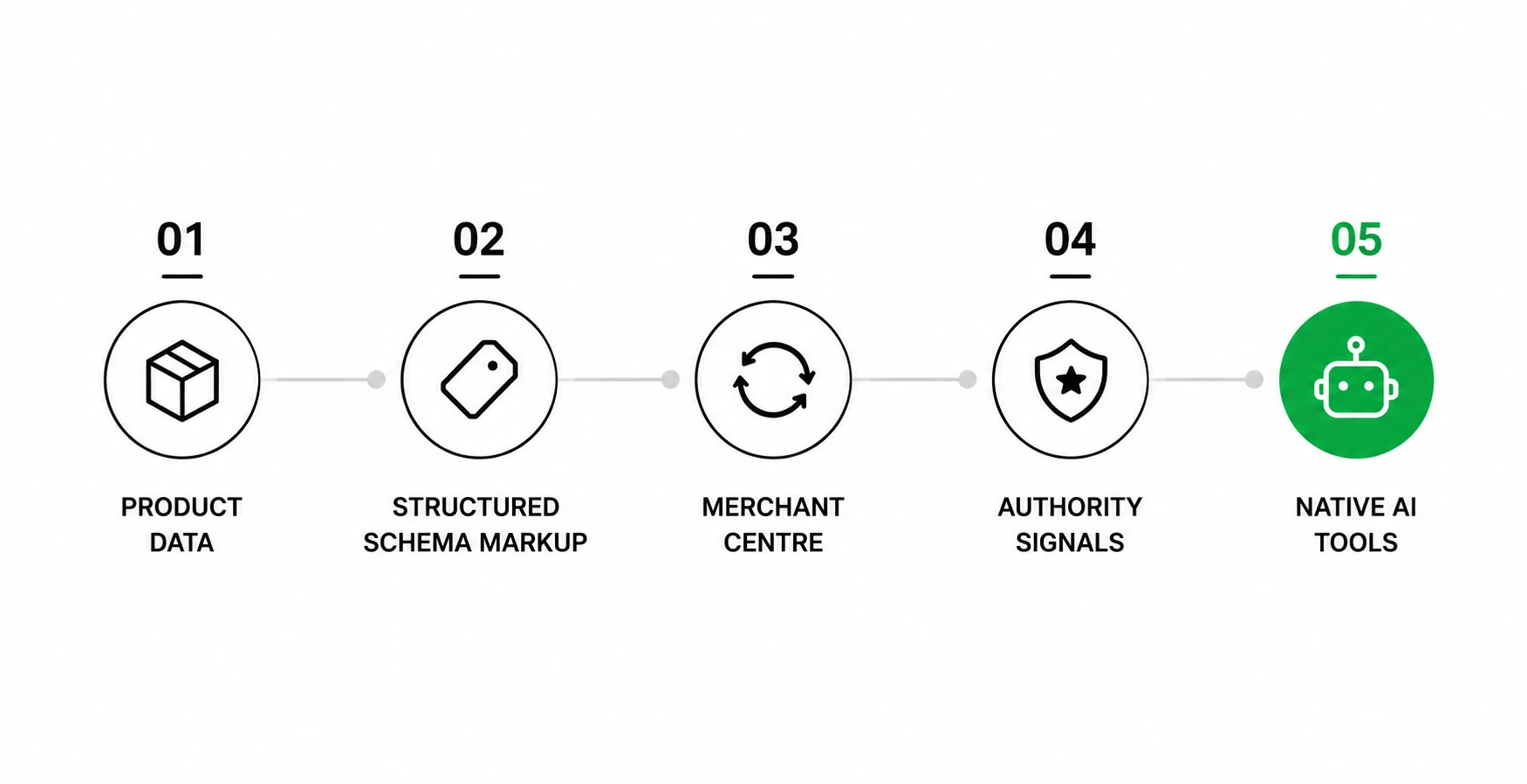
Here are the five concrete steps our digital strategy team implements for every GEO engagement.

Image

1. Complete your product data comprehensively

Fill every attribute — material, size, colour, use case, occasion. AI agents rank by data completeness. Thin listings are invisible to Gemini and ChatGPT Shopping

2. Implement structured schema markup

Add Product, Review, and FAQ schema across your catalogue — the language AI agents read. 

3. Optimise your Google Merchant Centre feed 

Your Merchant Centre feed directly influences ChatGPT’s shopping carousel. If built for ad bidding, it’s likely hurting your AI visibility. 

4. Build authentic third-party authority

86% of AI citations come from brand-owned sources. Our content services team helps brands build the editorial presence AI systems cite.

5. Use Shopify’s native AI tools

Install the Shopify Knowledge Base app to monitor what AI agents say about your store and ensure accurate representation. 

Conclusion: the window is open — but not for long

The merchants who invest in GEO now will build a compounding advantage in AI-driven product discovery. Whether you’re on Shopify PlusBigCommerce, or evaluating a platform migration — the question is whether your store is positioned to win inside it.

ThinkLab works with Shopify and Shopify Plus merchants to build the technical foundations, content strategy, and feed infrastructure needed to be recommended — not just ranked — in the age of AI commerce.

RELATED READING

Get your free AI Commerce audit.

Receive a practical assessment of your store's GEO readiness, AI discoverability and conversion opportunities.

Let's discuss your Commerce project ↗